
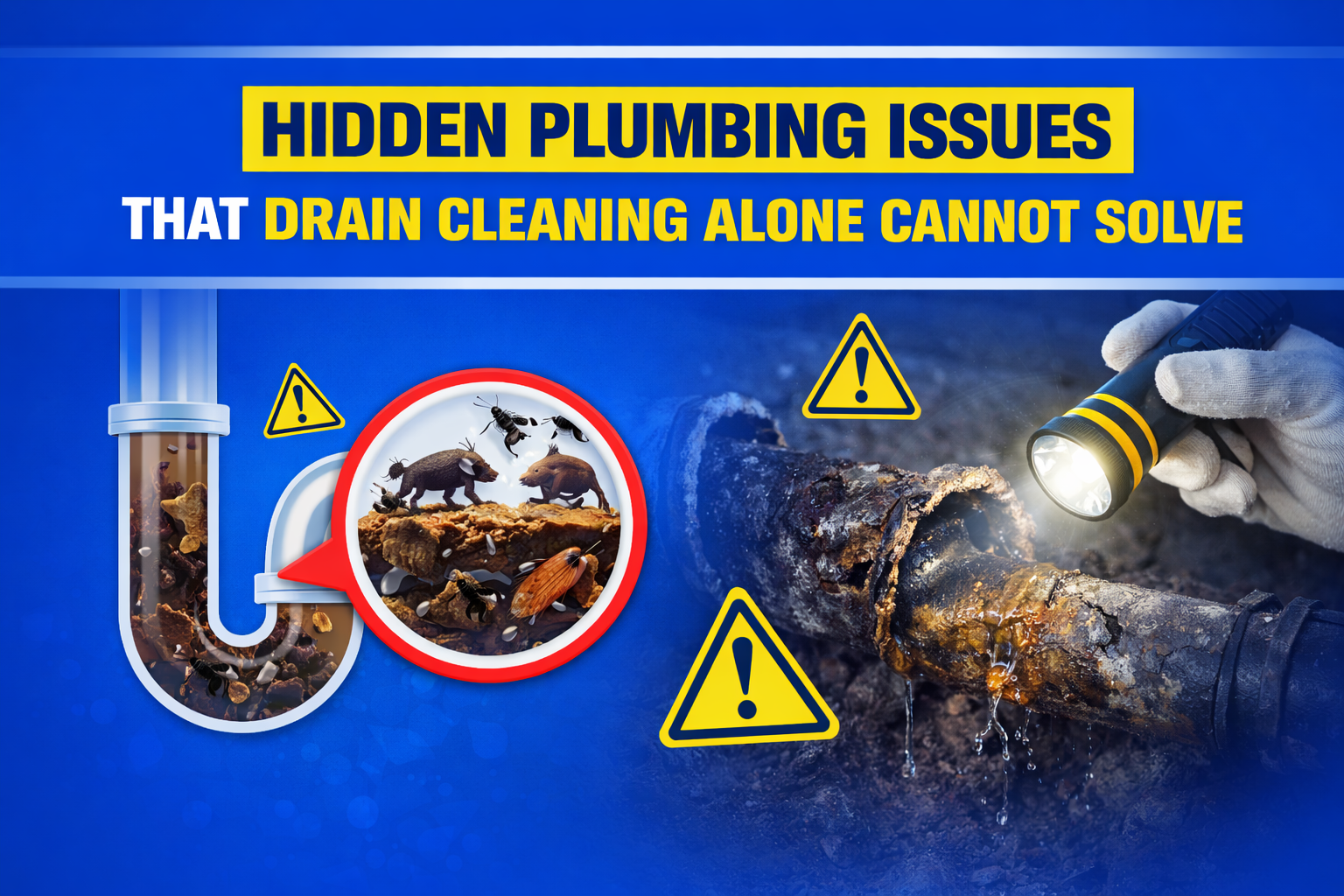
Many people think slow drains mean a simple blockage that cleaning can fix. In reality, plumbing systems hide deeper problems that basic methods cannot solve. These issues develop slowly and often remain hidden for a long time. By the time clear signs appear, damage may already be serious and costly. This is why professional plumbing services play an important role in proper diagnosis. Understanding these hidden problems helps property owners prevent water damage, health risks, and repeated repair expenses.
Some Hidden Plumbing Issues That Are Not Obvious At Plain Sight
Pipe Corrosion Inside Walls
Pipes can corrode internally due to old age, poor water quality, or chemical cleaners. This damage cannot be seen during routine plumbing and drain cleaning. Over time, corrosion reduces water flow and weakens pipe walls. Small pinhole leaks then develop and spread moisture inside the walls. This slowly damages paint, plaster, wiring, and even wooden structures.
Tree Root Intrusion in Drain Lines
Tree roots are attracted to moisture inside underground pipes. They enter through small cracks or joints and grow over time. Drain cleaning may remove surface blockage but leaves roots behind. Roots continue expanding and crack pipes further. This leads to repeated clogs, sewage backups, and complete pipe failure.
Misaligned or Sagging Pipes
Pipes can shift due to soil movement, traffic load, or poor installation. This creates low sections where waste collects instead of flowing freely. Drain cleaning only clears temporary buildup in these areas. The pipe position remains unchanged, causing frequent slow drains. Over time, pressure builds and increases the risk of leaks or bursts.
Hidden Leaks Under Flooring
Leaks under tiles or concrete floors often go unnoticed for months. Water spreads slowly and evaporates before reaching the surface. Basic drain cleaning does not detect these leaks. Moisture weakens flooring, causes foul smells, and promotes mould growth. Repair becomes costly once tiles or slabs need removal.
Faulty Pipe Joints and Seals
Pipe joints wear out due to pressure changes and ageing materials. Small gaps allow water to escape slowly. These leaks are not visible during routine cleaning work. Over time, joints loosen further and increase leakage. This results in water damage and higher utility bills.
Blocked Vent Pipes
Vent pipes balance air pressure and release sewer gases safely. Leaves, bird nests, or debris can block these pipes. Drain cleaning does not clear vent blockages. This causes gurgling sounds, slow drainage, and bad odours indoors. Pressure buildup can also damage pipe joints.
Undetected Mineral Buildup
Hard water leaves mineral deposits inside pipes over time. These deposits narrow the pipe diameter slowly. Drain cleaning may improve flow temporarily, but it does not remove hardened buildup. Reduced flow increases pressure and stress on pipes. Eventually, this leads to cracks and frequent blockages.
Identifying and Solving Hidden Plumbing Issues
Video Pipe Inspection
Camera inspections allow plumbers to see inside pipes clearly. They help locate cracks, corrosion, roots, and misalignment. This method avoids unnecessary wall or floor damage. Professional plumbing services use these inspections for accurate repair planning. It saves time and prevents guesswork.
Pressure Testing for Leaks
Pressure testing checks water lines for hidden leaks. A drop in pressure indicates a problem even when no water is visible. This method finds leaks under floors and behind walls. Early detection prevents mould growth and structural damage. It also reduces long-term repair costs.
Moisture and Thermal Detection Tools
Advanced tools detect moisture and temperature changes behind surfaces. These tools locate hidden leaks without breaking walls. Drain cleaning does not identify such issues. Early detection limits damage to flooring and walls. Repairs become faster and less disruptive.
Soil and Drain Line Assessment
Plumbers assess soil conditions around underground pipes. Shifting or eroded soil often causes pipe movement. This explains recurring drainage problems after cleaning. Repairs may involve pipe support or repositioning. Addressing soil issues ensures long-term system stability.
Root Removal and Pipe Repair
Special cutting tools remove tree roots from drain lines. In severe cases, damaged sections are replaced or relined. This provides a lasting solution compared to repeated plumbing and drain cleaning. Root barriers may also be installed. These steps prevent future root intrusion.
Vent Pipe Inspection and Repair
Vent pipes are checked for blockages and cracks. Cleaning restores airflow and pressure balance. Repairs prevent sewer gas odours and slow drainage. Proper venting protects pipe joints from stress. This improves overall plumbing performance.
Joint Sealing and Pipe Relining
Loose joints are sealed using durable modern materials. Pipe relining creates a new inner surface inside old pipes. This fixes leaks without full replacement. It strengthens pipes and extends their lifespan. Relining reduces downtime and repair costs.
Preventive Maintenance Planning
Plumbers create maintenance schedules based on pipe condition. Regular inspections prevent hidden issues from growing. This approach reduces emergency repairs and system failures. Property owners gain better control over maintenance costs. Prevention always costs less than major repairs.
The Bottom Line
Hidden plumbing problems often grow silently and cause serious damage over time. Drain cleaning alone cannot fix issues like corrosion, leaks, root intrusion, or pipe misalignment. Only proper inspection and expert repair can address these problems fully. Choosing professional plumbing services ensures accurate diagnosis and long-term solutions. With timely maintenance and the right methods, plumbing systems remain safe, reliable, and cost-effective for years.



0 Comments