
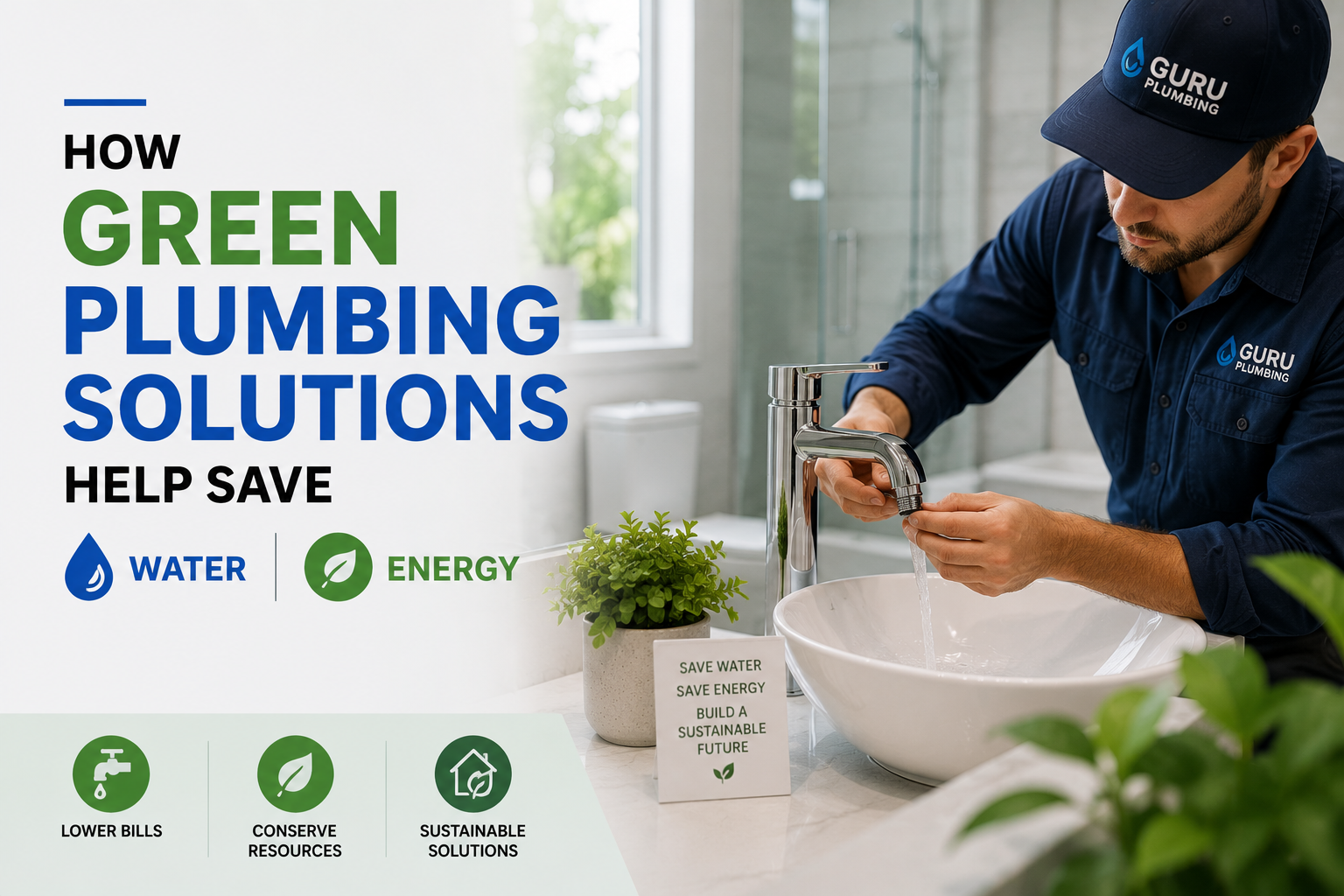
Australia is one of the driest inhabited continents on Earth, and water conservation is no longer simply an environmental aspiration; it is a practical necessity. As water costs rise and energy efficiency standards become more stringent, more homeowners and businesses are turning to Green Plumbing Solutions to reduce resource consumption, lower utility bills, and minimise environmental impact. Understanding what these systems involve and how they work can help you make smarter, more informed decisions for your home or commercial property, and avoid the common mistake of treating upgrades as a single, isolated fix rather than a coordinated system improvement. With the right guidance and a qualified plumber, even modest changes can deliver measurable results quickly.
What Are Green Plumbing Solutions?
Green plumbing refers to a range of design strategies, technologies, and fixtures aimed at reducing water and energy consumption in both residential and commercial buildings. Unlike conventional plumbing systems that treat water supply and waste management in isolation, green plumbing takes a whole-system view, examining where water comes from, how it is used, and where it goes after use.
Key components typically include water-efficient fixtures such as low-flow taps, dual-flush toilets, and aerated showerheads; solar hot water systems and heat pump water heaters; rainwater harvesting systems; greywater recycling setups; and smart water monitoring technology. These elements work in combination to significantly reduce the volume of mains water consumed and the energy required to heat it.
In Australia, green plumbing installations are increasingly aligned with the Water Efficiency Labelling and Standards (WELS) scheme, which rates plumbing products on a star system to help consumers compare water efficiency. Fixtures rated under WELS are tested against Australian Standard AS 6400, and most green plumbing upgrades will use only products that meet or exceed these ratings. Choosing WELS-rated products is not just good environmental practice, it is also a requirement under many state and territory building codes when replacing or installing new fixtures.
Water-Saving Technologies That Make a Measurable Difference
Some of the most impactful water-saving measures are also the most straightforward to implement. Low-flow showerheads can reduce shower water consumption by up to 50 percent without any noticeable reduction in pressure when installed correctly. A household of four replacing standard showerheads with 3-star WELS-rated models can save tens of thousands of litres of water annually, a meaningful reduction in both environmental footprint and water costs.
Dual-flush toilets have become the standard in Australian homes, but older properties may still be running single-flush systems that use significantly more water per flush. Upgrading these units is one of the fastest-payback investments available in residential plumbing. Similarly, replacing ageing tap washers or installing flow restrictors on kitchen and bathroom taps can yield savings with minimal outlay.
Rainwater harvesting systems collect runoff from roof surfaces and store it in tanks for use in toilet cisterns, garden irrigation, laundry, and in some cases, with appropriate filtration, potable use. Depending on your property’s roof catchment area and local rainfall, a correctly sized tank can dramatically reduce reliance on mains water throughout the year. Greywater recycling systems, which treat and redirect wastewater from showers, baths, and laundry for outdoor use, further extend the value of every litre of water entering the property. Both systems require professional installation to ensure compliance with local health and building regulations.
Energy Efficiency in Plumbing: Hot Water Systems and Beyond
Hot water heating accounts for approximately 25 percent of the average Australian household’s energy use, making it one of the most significant targets for efficiency improvement. Solar hot water systems use roof-mounted collectors to capture solar energy and transfer it to a storage tank, reducing reliance on gas or electricity. In areas with high solar irradiance, which covers the majority of Australia, well-positioned solar hot water systems can meet 60 to 90 percent of a household’s hot water demand across the year.
Heat pump water heaters offer an effective alternative for properties where roof installation is not practical. These units extract heat from the surrounding air and use it to heat water, operating at three to four times the efficiency of a conventional electric storage heater. Both technologies can be integrated with existing plumbing infrastructure with minimal disruption, and many installations qualify for government rebates under the Small-scale Renewable Energy Scheme (SRES) or state-specific incentive programs.
Guru Plumbing’s team of experienced plumbers is qualified to assess your current hot water setup and recommend the most appropriate upgrade pathway based on your property type, energy tariff, and usage patterns. Reducing hot water energy consumption does not require a complete system overhaul; in many cases, targeted upgrades to specific components deliver substantial savings immediately.
The Long-Term Value of Going Green
The financial case for green plumbing is compelling. Water bills are rising across Australia as infrastructure costs increase and supply pressures grow in drought-affected regions. Energy prices have also climbed steadily, making hot water heating a growing line item in household budgets. Green plumbing investments tend to have clearly calculable payback periods, and many are eligible for government rebates or incentives through state and territory programs, making the upfront cost more manageable than it might initially appear.
Beyond direct savings, green-rated properties are increasingly attractive to buyers and tenants who factor sustainability credentials into their decisions. For commercial properties, green plumbing also contributes to achieving ratings under the Green Star or NABERS schemes, which are becoming standard benchmarks for building performance in the Australian property market. Investors and developers who incorporate green plumbing at the design stage consistently report faster leasing timelines and stronger asset valuations over time. Tenants and buyers are increasingly scrutinising utility running costs alongside purchase price, which means a property with verified low water and energy consumption stands out in a competitive market.
Adopting Green Plumbing Solutions is one of the most practical steps any property owner can take to reduce costs, conserve resources, and future-proof their investment. Whether you are upgrading a single fixture or planning a comprehensive overhaul of your water and energy systems, Guru Plumbing has the expertise and product knowledge to deliver results that matter. Contact us today to arrange a full property assessment and start your journey toward a more efficient, sustainable home or business.
0 Comments