
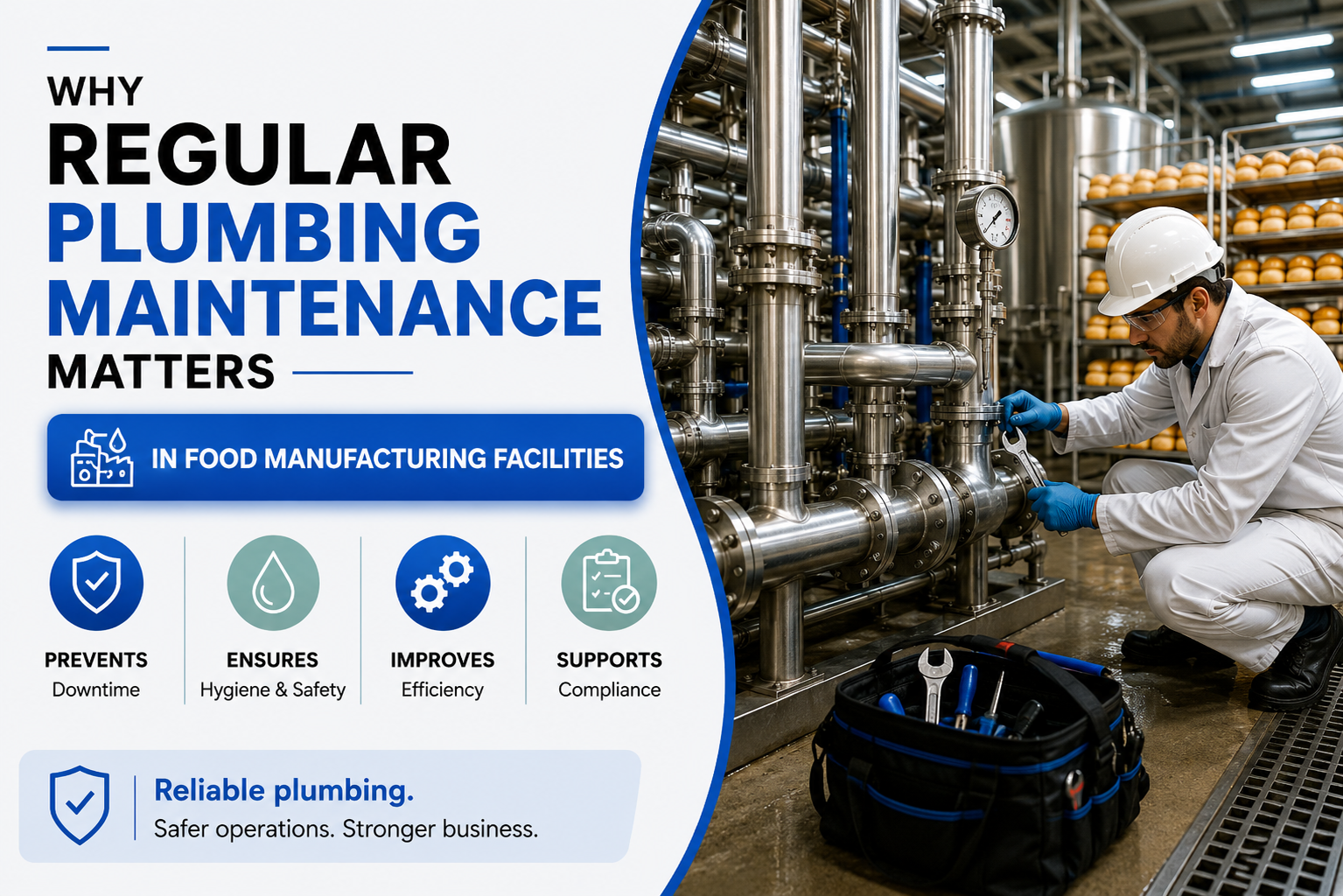
Food manufacturing facilities operate under some of the strictest hygiene and safety standards of any industry in Australia. From food-grade water supply systems to industrial drainage networks and chemical-resistant waste management infrastructure, every element of a facility’s plumbing plays a direct role in product safety, regulatory compliance, and operational continuity. Yet plumbing maintenance is frequently one of the lowest priorities on a facility manager’s schedule, right up until something goes seriously wrong. Implementing a structured plumbing maintenance service is not just a best practice in food manufacturing; it’s a fundamental requirement for protecting your product, your staff, your customers, and your business licence.
The Unique Plumbing Demands of Food Manufacturing Environments
Food manufacturing environments place a distinct and demanding set of requirements on plumbing systems that simply don’t exist in standard commercial or industrial settings. Hot water systems must maintain precise and consistent temperatures to support CIP (Clean-in-Place) sanitation processes and comply with HACCP food safety plans. Drainage systems must handle large volumes of effluent, food waste, fats, oils, and cleaning chemicals without blockages, pooling, or cross-contamination risk. Water supply lines must deliver consistently clean, potable water at adequate pressure to all points of use throughout the facility at all times. Any failure or degradation in any of these systems can rapidly lead to product contamination, failed third-party audits, health department interventions, product recalls, or full facility shutdowns, all of which carry enormous financial and reputational consequences that are difficult to recover from.
Key Plumbing Risks That Must Be Actively Managed
Food manufacturers must actively manage several plumbing-related risks through a combination of design, installation quality, and ongoing maintenance. Backflow contamination is one of the most serious risks; without functioning and regularly tested backflow prevention devices, contaminants from drainage lines, chemical dosing systems, or process pipework can enter the potable water supply, directly threatening product safety and public health. Blocked drains are a constant hazard in food processing environments, where organic waste, grease, and food solids accumulate rapidly in drainage systems. Neglected drains create serious hygiene risks, attract pest activity, and can cause flooding on production floors during peak processing periods.
Pipe corrosion and undetected leaks are particularly problematic in food manufacturing contexts. Pipes and fittings are routinely exposed to acidic or alkaline cleaning agents, steam, and significant temperature variation, all of which accelerate corrosion in standard pipework materials. A slow leak from a corroded pipe above a production line can go unnoticed for days while contaminating products and creating slip hazards for staff. Hot water system failures present another significant risk, as an inadequate or inconsistent hot water supply directly disrupts sanitation procedures and can result in non-compliance with food safety certification requirements.
The Role of Scheduled Plumbing Maintenance in Compliance
A regularly scheduled plumbing maintenance service allows facility managers to proactively identify and address potential issues before they escalate into production-halting or compliance-threatening events. Comprehensive maintenance inspections should cover all water supply lines and connection points, drainage systems and grease traps, hot water units and temperature control systems, backflow prevention devices, pipe fittings and joints, and any floor drains or interceptors across the facility. Detailed maintenance records are also a critical asset during third-party food safety audits and regulatory inspections, providing documented evidence that the facility is actively and systematically managing its plumbing infrastructure in line with industry expectations.
Guru Plumbing delivers expert professional plumbing services specifically tailored to the requirements of food manufacturing and processing facilities across Australia. Their licensed and highly experienced team understands the compliance obligations of the food industry and provides maintenance and repair solutions that keep your facility running safely, hygienically, and fully within regulatory requirements at all times.
Regulatory Expectations and the Cost of Non-Compliance
Australian food manufacturing facilities are required to comply with the Food Standards Australia New Zealand (FSANZ) Food Safety Standards, as well as relevant state-based food safety legislation and local council requirements. Plumbing systems that are not regularly maintained and documented can result in direct breaches of these standards, triggering regulatory investigations, forced shutdowns, and the potential loss of food safety certification. Major retail and wholesale customers increasingly conduct their own facility audits and may terminate supply agreements with manufacturers who cannot demonstrate adequate maintenance standards for their infrastructure.
Beyond regulatory compliance, the financial case for preventive plumbing maintenance service in food manufacturing is compelling. A single contamination event traced back to a plumbing failure can result in a full product recall, destruction of affected inventory, laboratory testing costs, and permanent reputational damage with retail partners and consumers. These costs dwarf the investment required to maintain a well-functioning plumbing system. Investing in routine maintenance is one of the most effective risk management strategies available to food manufacturers. Contact Guru Plumbing today to develop a tailored plumbing maintenance schedule that protects your operations, your product integrity, and your compliance standing.




0 Comments